

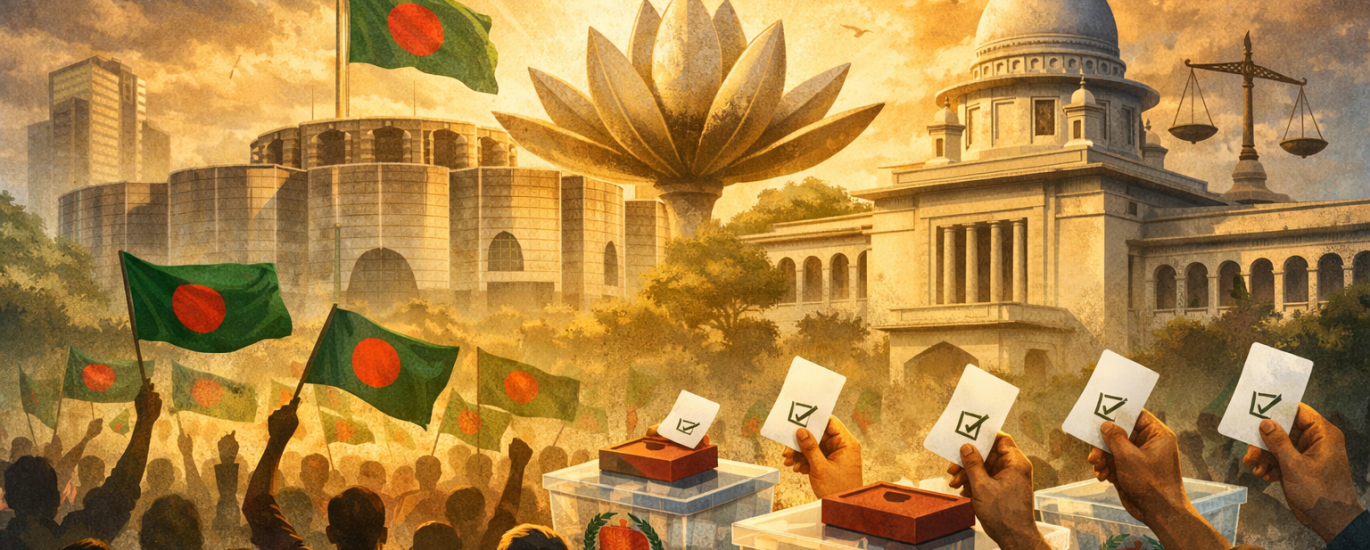
Although there are debates about both politics and politicians, in modern civilization, a beautiful and orderly state and society cannot be imagined without a political system. Just as politics and politicians have contributed to the progress of civilization around the world, politicians are also blamed for the failure to fulfill the desired development and expectations of the people in some countries. Especially the old, old-fashioned and uncreative politicians cannot give much to the country and the nation. These people are comfortable with the old system, so they want to keep the old system. But if we do not respond to the call of time and change and adapt to the new, development and human rights are all trapped in a cycle of mistakes and the fate of the nation is trapped in the same cycle.
Politics is not merely a contest for power; in the modern world, it is a dynamic process shaped by continuous social, economic, and technological transformation. Political parties that succeed in such an environment are not driven solely by the pursuit of electoral victory or control of government. Rather, they operate with a broader vision—one that prioritizes human welfare, social cohesion, ethical governance, and long-term stability. These parties tend to share a set of common characteristics that define their modern, positive, and humane nature. The following is a detailed exploration of those defining features.
Humanistic and People-Centered Philosophy
At the heart of modern political parties lies a commitment to human dignity and well-being. These parties place the needs, aspirations, and challenges of citizens at the center of their political agenda. Their policies are designed to improve quality of life, ensure equal opportunities, and protect vulnerable populations.
For example, the Labour Party in Norway emphasizes social welfare, universal healthcare, and accessible education. Its approach reflects a deep concern for reducing inequality, supporting disadvantaged groups, and promoting ethical governance that prioritizes citizens’ everyday lives.
Smart and Technology-Driven Strategies
Modern political organizations increasingly rely on technology to enhance both governance and electoral engagement. Digital tools enable them to better understand public opinion, communicate with voters, and deliver services efficiently.
The People’s Action Party in Singapore is a leading example. It employs data-driven decision-making, digital public services, and advanced communication strategies. By leveraging technology, such parties can respond quickly to citizen concerns, improve transparency, and make governance more efficient and accessible.
Positive and Integrative Policy Orientation
Rather than focusing solely on defeating political opponents, modern parties strive to create constructive and impactful policies. Their goal is to address real societal challenges—such as economic development, environmental sustainability, healthcare, and education—through inclusive and forward-thinking approaches.
The Liberal Party in Canada has demonstrated this through its policies on immigration, healthcare, and social inclusion. By promoting diversity and long-term planning, such parties contribute to stability and national progress grounded in ethical values.
Dynamic and Adaptive Leadership
In a rapidly changing world, political parties must remain flexible and responsive. Effective leadership involves the ability to adapt to new realities—whether they are technological innovations, global crises, or shifts in public opinion.
The Christian Democratic Union in Germany, particularly under the leadership of Angela Merkel, exemplified this adaptability. The party adjusted its policies to address global economic challenges, migration issues, and environmental concerns, demonstrating resilience and pragmatic decision-making.
Transparency and Accountability
Transparency and accountability are fundamental to democratic legitimacy. Modern political parties uphold these principles by ensuring openness in governance, ethical conduct in political processes, and responsibility toward citizens.
In countries like Norway and Sweden, social democratic parties maintain high standards of transparency in public spending, policymaking, and electoral practices. This fosters public trust and strengthens democratic institutions.
Creativity and Innovation
Modern challenges require innovative solutions. Successful political parties encourage creativity in policymaking and are willing to experiment with new ideas rather than relying solely on traditional models.
For instance, the New Zealand National Party in New Zealand has introduced digital education initiatives, including online learning systems and improved voter information platforms. Such innovation enables parties to remain relevant and effective in a fast-evolving world.
Social Orientation and Inclusiveness
A humane political party values inclusivity and social justice. It ensures that all citizens—regardless of gender, ethnicity, religion, or socio-economic background—have equal opportunities to participate in political and social life.
The Democratic Party in South Korea has taken steps to promote social inclusion through laws and programs that empower marginalized communities. By fostering mutual respect and social harmony, such parties contribute to national unity.
Conclusion
In summary, modern, positive, and humane political parties are characterized by a shared commitment to several core principles: prioritizing human welfare, utilizing technology and data in decision-making, adopting constructive and long-term policies, remaining adaptable in changing circumstances, ensuring transparency and accountability, embracing innovation, and promoting inclusivity.
These qualities do more than secure electoral success—they help build stable, ethical, and progressive societies. For contemporary political leadership, these characteristics serve as a guiding framework, shaping a vision of politics that is not only effective but also responsible, compassionate, and forward-looking.
